華爾街美股總體策略筆記
2026-09-16 · 含原圖
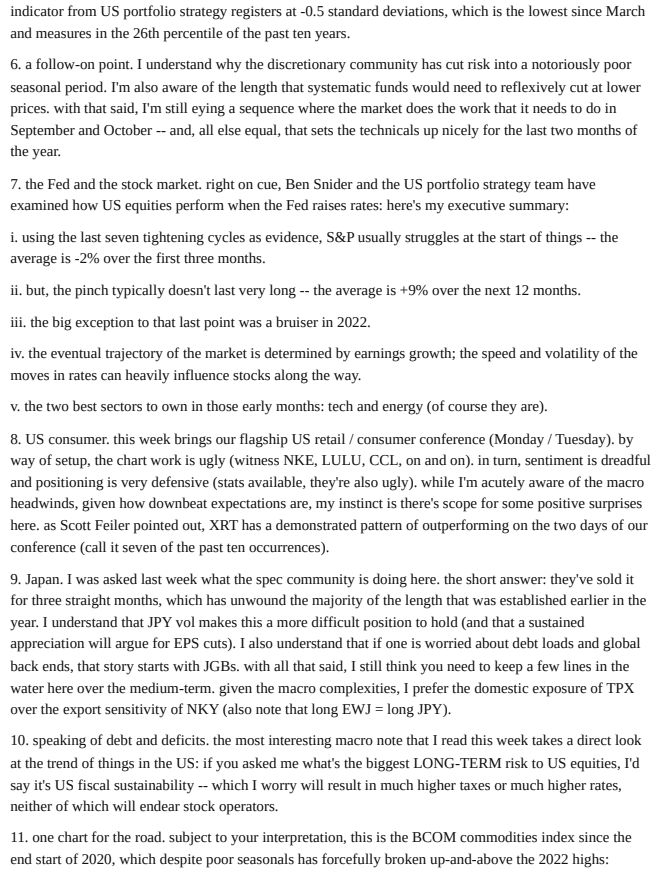
image_2.png 圖片詳細分析報告
1. 圖片類型與整體說明
本圖片是一份來自華爾街投資機構(高盛 Goldman Sachs)交易策略與市場研究部門的機構策略筆記(Market Strategy / Institutional Flow Note)截圖。
圖片採用簡潔的黑白 serif 襯線體格式,內容接續上一頁的文字,呈現第 6 至 11 點的條列式觀點。重點探討美股季節性倉位調整、聯準會(Fed)升息週期對 S&P 500 指數與類股的歷史影響、美國消費零售股的前瞻、日股與日圓配置策略、美債與財政赤字風險,以及大宗商品指數(BCOM)向上突破等議題。
2. 所有可見文字
以下為圖中出現的所有文字逐字擷取(含頂部截斷文字、原始大小寫、標點與數字):
indicator from US portfolio strategy registers at -0.5 standard deviations, which is the lowest since March and measures in the 26th percentile of the past ten years.
a follow-on point. I understand why the discretionary community has cut risk into a notoriously poor seasonal period. I'm also aware of the length that systematic funds would need to reflexively cut at lower prices. with that said, I'm still eying a sequence where the market does the work that it needs to do in September and October -- and, all else equal, that sets the technicals up nicely for the last two months of the year.
the Fed and the stock market. right on cue, Ben Snider and the US portfolio strategy team have examined how US equities perform when the Fed raises rates: here's my executive summary:
i. using the last seven tightening cycles as evidence, S&P usually struggles at the start of things -- the average is -2% over the first three months.
ii. but, the pinch typically doesn't last very long -- the average is +9% over the next 12 months.
iii. the big exception to that last point was a bruiser in 2022.
iv. the eventual trajectory of the market is determined by earnings growth; the speed and volatility of the moves in rates can heavily influence stocks along the way.
v. the two best sectors to own in those early months: tech and energy (of course they are).
US consumer. this week brings our flagship US retail / consumer conference (Monday / Tuesday). by way of setup, the chart work is ugly (witness NKE, LULU, CCL, on and on). in turn, sentiment is dreadful and positioning is very defensive (stats available, they're also ugly). while I'm acutely aware of the macro headwinds, given how downbeat expectations are, my instinct is there's scope for some positive surprises here. as Scott Feiler pointed out, XRT has a demonstrated pattern of outperforming on the two days of our conference (call it seven of the past ten occurrences).
Japan. I was asked last week what the spec community is doing here. the short answer: they've sold it for three straight months, which has unwound the majority of the length that was established earlier in the year. I understand that JPY vol makes this a more difficult position to hold (and that a sustained appreciation will argue for EPS cuts). I also understand that if one is worried about debt loads and global back ends, that story starts with JGBs. with all that said, I still think you need to keep a few lines in the water here over the medium-term. given the macro complexities, I prefer the domestic exposure of TPX over the export sensitivity of NKY (also note that long EWJ = long JPY).
speaking of debt and deficits. the most interesting macro note that I read this week takes a direct look at the trend of things in the US: if you asked me what's the biggest LONG-TERM risk to US equities, I'd say it's US fiscal sustainability -- which I worry will result in much higher taxes or much higher rates, neither of which will endear stock operators.
one chart for the road. subject to your interpretation, this is the BCOM commodities index since the end start of 2020, which despite poor seasonals has forcefully broken up-and-above the 2022 highs:
3. 結構化內容
| 編號 / 主題 | 核心摘要與數據重點 |
|---|---|
| 頂部補充數據 | 美股組合策略指標位於 -0.5 個標準差,創 3 月以來新低,處於過去 10 年的 第 26 百分位。 |
| 6. 季節性與資金流向 | • 主動型基金(Discretionary)因季節性淡季降低風險;系統型基金(Systematic)低價時可能被動砍倉。 • 預計市場在 9 月與 10 月完成必要的洗盤調整後,將為 11 月與 12 月的年末反彈奠定良好技術面基礎。 |
| 7. Fed 升息與美股歷史表現 | 引述 Ben Snider 策略團隊分析過去 7 次緊縮週期: • 前 3 個月:S&P 500 平均下跌 -2%。 • 後續 12 個月:平均回升 +9%(2022 年為顯著特例)。 • 核心動因:市場最終走勢由企業獲利成長(earnings growth)決定,但利率變動速度與波動會影響過程。 • 最佳類股:升息初期表現最佳的兩大類股為科技(Tech)與能源(Energy)。 |
| 8. 美國消費與零售會議 | • 個股(如 NKE、LULU、CCL)走勢圖與情緒極其低迷。 • 鑑於市場預期已降至低谷,存在利空出盡的正面驚喜空間。 • 引用 Scott Feiler 觀點:零售 ETF(XRT)在會議舉辦的兩天內有超越大盤的歷史規律(過去 10 次中有 7 次勝出)。 |
| 9. 日本股市與日圓 | • 投機資金已連續 3 個月淨賣出日股,平倉了年初建立的大部分多頭。 • 考量日圓波動與出口敏感性,中長期更偏好內需導向的 TPX(東證指數),勝過出口敏感的 NKY(日經225)。 • 註記:Long EWJ 等同於 Long JPY。 |
| 10. 財政赤字與美股長期風險 | • 美股最大的長期風險(LONG-TERM risk)在於美國財政永續性(US fiscal sustainability)。 • 憂心未來將被迫大幅提高稅率或維持更高利率,對股市操作者不利。 |
| 11. 大宗商品指數 | • BCOM 大宗商品指數無視季節性淡季,已強勢突破 2022 年的高點。 |
4. 視覺元素
- 版面佈局:純文字黑白單欄頁面,採極簡印製風格,無視覺圖表或繽紛色彩,適合機構經理人快速閱讀。
- 字體與階層:採用傳統襯線體(Serif),主標題點次以加粗小寫字體呈現(如
6. a follow-on point.),第二層列表以小寫羅馬數字(i.~v.)縮排排版。 - 強調方式:文中運用大寫字母全拼(如
LONG-TERM)以及雙破折號(--)強調語意重點。
5. 上下文與推測用途
- 資料來源:文中直接提及高盛知名策略師「Ben Snider(美股組合策略團隊)」與「Scott Feiler(零售策略師)」,確定此截圖來自高盛(Goldman Sachs)機構交易部門發送給法人客戶的定期市場晨會或 flow 策略筆記。
- 推測用途:供對沖基金、公募基金經理人及機構交易員參考,作為 9-10 月美股季節性拉回時的買點規劃、Fed 升息週期的類股配置(科技與能源)、日本股市選擇(TPX vs NKY)以及宏觀長期風險(財政赤字)之決策依據。
華爾街美股總體策略筆記
本圖為華爾街投資機構的市場研究策略筆記,重點分析美股在聯準會升息週期與季節性修正下的走勢規律。報告指出 S&P 500 指數在升息初期雖易面臨回檔,但後續 12 個月平均有 +9% 漲幅,且科技與能源板塊表現最佳;同時預計美股在 9-10 月打底後將迎來年末反彈行情。此外,內文亦針對美國消費零售股短線機會、日本東證指數(TPX)配置優勢、美國財政赤字長期風險及大宗商品指數突破 2022 年高點等主題提出具體交易建議。